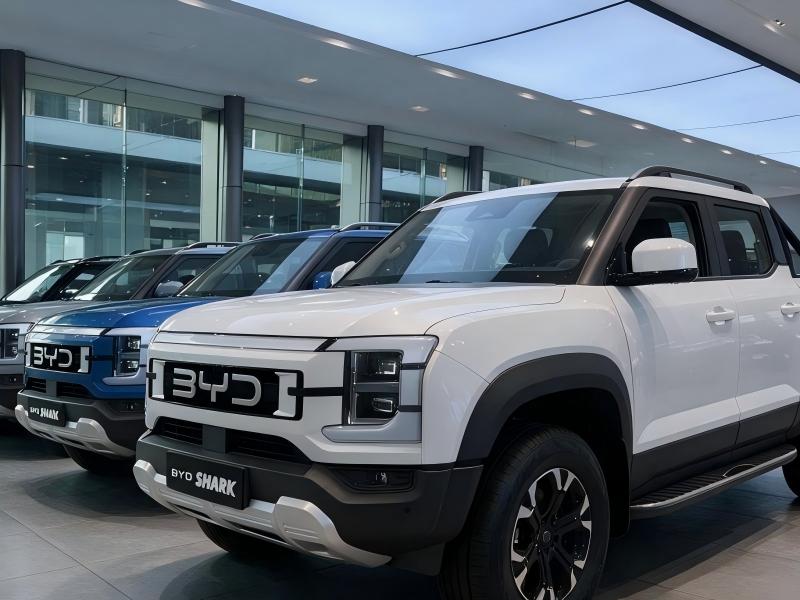
The BYD Shark PHEV truck is not just another pickup—it is the first mass-market plug-in hybrid utility vehicle engineered from the ground up for global export. Launched in May 2024 in Mexico and now rolling into showrooms across Australia, South Africa, the UAE, Saudi Arabia, and beyond, the BYD Shark 6 represents a fundamental shift in how commercial fleets, contractors, and adventure buyers think about power, efficiency, and capability. In 2026, with three distinct trims, 350 kW of peak power, and a 3.5-tonne towing capacity on the flagship model, this PHEV pickup is rewriting the rulebook for markets where diesel has dominated for decades.
For importers, dealers, and fleet operators across Africa and the Middle East, the Shark 6 arrives at a pivotal moment. Governments are tightening emissions standards, fuel costs remain volatile, and buyers are increasingly open to electrified alternatives—provided they do not sacrifice the toughness, range, and utility that define the pickup segment. The Shark 6 delivers on all three counts, and it does so with a price point that undercuts most European and Japanese competitors by a significant margin.
What Is the BYD Shark 6? The World’s First Mass-Market PHEV Pickup
A Plug-In Hybrid That Changes the Pickup Game
Traditional pickups force a choice: power or efficiency, torque or emissions, capability or cost. The BYD Shark 6 rejects that binary. Built on BYD’s third-generation DM-i super-hybrid platform, the Shark 6 pairs a turbocharged petrol engine with dual electric motors and a 29.58 kWh lithium-iron-phosphate (LFP) Blade Battery. The result is a vehicle that can commute 80–100 kilometres on pure electric power, tow 3.5 tonnes when properly equipped, and still achieve fuel consumption figures that make a diesel Hilux look thirsty.
Unlike retrofit hybrid systems grafted onto existing combustion platforms, the Shark 6 was designed as a PHEV from the chassis up. The battery pack is integrated into the ladder frame, the electric motors are built into the transmission, and the power management system seamlessly switches between EV, series-hybrid, and parallel-hybrid modes depending on driving conditions, battery state of charge, and driver demand. This is not a compromise—it is a purpose-built solution.
BYD’s Export-First Strategy: Why the Shark 6 Was Built for Global Markets
BYD’s approach with the Shark 6 is notable: the vehicle was launched for export before any domestic Chinese market release. That decision reflects both BYD’s confidence in global demand and the reality that pickup culture—especially the dual-cab, four-door, family-and-work format—is far stronger in Australia, South America, the Middle East, and Africa than it is in China.
By the first half of 2026, BYD had shipped 20,037 Shark 6 units globally. While that figure represents a 25.76% year-over-year decline—largely due to intensifying competition from GWM, JAC, and Chery—the Australian market alone absorbed 85% of June 2026 deliveries, with 3,398 units sold in a single month. South Africa, the UAE, Saudi Arabia, Iraq, and Chile are all active markets, and the list is expanding. For importers in Africa and the Middle East, this means established supply chains, proven homologation pathways, and a growing network of parts and service support.
2026 BYD Shark 6: Full Specifications & Trim Breakdown
BYD offers the Shark 6 in three distinct trims for 2026, each targeting a different buyer profile. Understanding the differences is critical for importers deciding which configuration to stock.
| Specification | Dynamic Cab-Chassis | Premium | Performance |
|---|---|---|---|
| Engine | 1.5L turbo 4-cyl + dual e-motors | 1.5L turbo 4-cyl + dual e-motors | 2.0L turbo 4-cyl + dual e-motors |
| Total Power | 321 kW | 321 kW | 350 kW |
| Total Torque | 650 Nm | 650 Nm | 700 Nm |
| Battery | 29.58 kWh LFP Blade | 29.58 kWh LFP Blade | 29.58 kWh LFP Blade |
| EV Range | ~80–100 km (NEDC) | ~80–100 km (NEDC) | ~80–100 km (NEDC) |
| Combined Fuel Consumption | 2.0 L/100km (battery >25%) | 2.0 L/100km (battery >25%) | 1.3 L/100km (battery >25%) |
| Towing Capacity | 2,500 kg | 2,500 kg | 3,500 kg (braked) |
| Payload | ~1,000 kg | ~1,000 kg | ~1,000 kg |
| Infotainment | 12.8″ touchscreen | 15.6″ rotating touchscreen | 15.6″ rotating touchscreen |
| Seats | Cloth, 5 seats | Leather, ventilated front seats | Leather, ventilated front seats |
| ADAS | Basic | Full suite (AEB, ACC, LKA, BSD) | Full suite + crawl mode |
| V2L Output | 6.6 kW (3x 230V sockets) | 6.6 kW (3x 230V sockets) | 6.6 kW (3x 230V sockets) |
| ANCAP Rating | 5 stars | 5 stars | 5 stars |
| Warranty (china) | 6 yr / 150,000 km | 6 yr / 150,000 km | 6 yr / 150,000 km |
| Battery Warranty (china) | 8 yr / 160,000 km | 8 yr / 160,000 km | 8 yr / 160,000 km |
Dynamic Cab-Chassis: The Tradie-Friendly Entry Point
The Dynamic trim is BYD’s answer to the commercial buyer who needs a workhorse, not a luxury statement. Priced at $55,900 AUD in Australia, it features a 12.8-inch touchscreen, cloth seating, and a cab-chassis configuration that allows buyers to fit custom trays, service bodies, or equipment mounts. The 321 kW powertrain is identical to the Premium trim, and the 2,500 kg towing capacity handles most commercial trailers with ease. For African construction firms, agricultural operators, and municipal fleets, this is the pragmatic choice—maximum capability, minimum cost, and the same 6.6 kW V2L power outlet that turns the truck into a mobile generator.
Premium: The Volume Seller
At $57,900 AUD, the Premium trim adds just $2,000 to the Dynamic price but delivers significant upgrades: a 15.6-inch rotating touchscreen, leather upholstery, ventilated front seats, and the full advanced driver assistance suite including autonomous emergency braking, adaptive cruise control, lane keep assist, and blind spot detection. This is the trim that will appeal to dual-purpose buyers—those who need a work truck during the week and a family vehicle on weekends. For Middle Eastern and North African markets where buyer expectations lean toward comfort and technology, the Premium is likely the volume play.
Performance: 350 kW, 3.5-Tonne Towing, and the Flagship Experience
The Performance trim is where the Shark 6 silences any remaining skepticism about electrified pickups. The 2.0-litre turbocharged engine, combined with uprated electric motors, delivers 350 kW and 700 Nm—figures that embarrass most V8 petrol trucks and match or exceed many diesel competitors. Critically, the Performance is the only trim rated to tow 3,500 kg (braked), matching the Toyota Hilux, Ford Ranger, and Isuzu D-Max at their maximum ratings. It also adds crawl mode for low-speed off-roading and a more sophisticated all-wheel-drive calibration. At $62,900 AUD, it remains priced below many comparably equipped diesel flagships.
Powertrain Deep Dive: DM-i Super Hybrid + Blade Battery
The Shark 6’s hybrid system is not a mild hybrid or a simple stop-start arrangement. It is a full series-parallel PHEV architecture. In EV mode, the vehicle runs purely on battery power for 80–100 kilometres—enough for most urban commutes without consuming a drop of fuel. When the battery depletes or demand exceeds electric capacity, the petrol engine fires up, either driving the wheels directly (parallel mode) or acting as a generator to power the electric motors (series mode). The system optimises in real time, and the result is a combined fuel consumption of 1.3–2.0 L/100km when the battery is above 25% charge.
The 29.58 kWh Blade Battery uses BYD’s lithium-iron-phosphate (LFP) chemistry, which offers superior thermal stability compared to nickel-manganese-cobalt (NMC) batteries. This matters enormously in African and Middle Eastern climates, where ambient temperatures regularly exceed 40°C. LFP cells are far less prone to thermal runaway, degrade more slowly over time, and tolerate deep discharges better than NMC alternatives. The battery is also structurally integrated into the chassis, improving torsional rigidity and crash protection.
BYD Shark 6 Global Pricing: What You’ll Pay in 2026
Understanding global pricing is essential for importers calculating margins and positioning their offerings. BYD does not sell at a single global price—local taxes, shipping costs, homologation fees, and brand positioning all create regional variation.
| Market | Trim | Local Price | Approx. USD | Notes |
|---|---|---|---|---|
| Australia | Dynamic Cab-Chassis | A$55,900 | ~$37,000 | Before on-road costs |
| Australia | Premium | A$57,900 | ~$38,300 | Before on-road costs |
| Australia | Performance | A$62,900 | ~$41,600 | Before on-road costs |
| South Africa | Premium (single trim offered) | R 969,900 | ~$53,000 | Incl. local taxes |
| UAE | Premium (single trim offered) | AED 158,900 | ~$43,300 | Incl. local taxes |
| Saudi Arabia | Premium (single trim offered) | SAR ~165,000 | ~$44,000 | Estimated |
The South African price of R 969,900 (~$53,000 USD) reflects significant import duties and local taxes, making it one of the more expensive global markets for the Shark 6. By contrast, the UAE pricing at AED 158,900 (~$43,300 USD) is competitive with mid-spec Toyota Hilux and Ford Ranger models, while delivering far more power and technology. For importers in other African markets, the Australian pricing provides a useful baseline: add freight, insurance, destination port charges, and local duties to arrive at a landed cost estimate.
BYD Shark 6 vs. The Competition: How It Stacks Up
The PHEV pickup segment is heating up rapidly. Here is how the Shark 6 Performance compares to its key rivals:
| Vehicle | Powertrain | Power / Torque | Towing | Price (USD est.) | PHEV? |
|---|---|---|---|---|---|
| BYD Shark 6 Performance | 2.0L PHEV | 350 kW / 700 Nm | 3,500 kg | ~$41,600 | Yes |
| Ford Ranger PHEV | 2.3L PHEV | ~270 kW | 3,500 kg | ~$55,000+ | Yes |
| GWM Cannon Alpha PHEV | 2.0T PHEV | ~300 kW | 3,500 kg | ~$40,000 | Yes |
| JAC T9 Hunter PHEV | 2.0L PHEV | 385 kW / 1,000 Nm | 3,500 kg | <$50,000 | Yes |
| Toyota Hilux Legend | 2.8L Diesel | 150 kW / 500 Nm | 3,500 kg | ~$50,000 | No |
| Isuzu D-Max | 3.0L Diesel | 140 kW / 450 Nm | 3,500 kg | ~$45,000 | No |
The numbers tell a clear story. The BYD Shark 6 Performance delivers more than double the power of a Toyota Hilux Legend, matches its towing capacity, and costs less—while offering 80–100 km of pure electric range and fuel consumption below 2.0 L/100km. The Ford Ranger PHEV is a credible rival but commands a significant price premium. The GWM Cannon Alpha PHEV and JAC T9 Hunter PHEV are the closest Chinese competitors, with the JAC offering even more torque (1,000 Nm) but at the cost of a less established export network and brand recognition.
One caveat: the Shark 6’s Premium and Dynamic trims are limited to 2,500 kg towing, which is below the 3,500 kg standard set by most competitors across all trims. For importers serving heavy-towing markets—construction, agriculture, caravan tourism—the Performance trim is the only viable option. This is a strategic consideration when deciding which variants to stock.
Why the BYD Shark 6 Is Perfect for Africa & the Middle East
The PHEV Advantage: Electric Commute, Diesel-Range Road Trips
Africa and the Middle East present a unique challenge for vehicle electrification: urban centres are increasingly congested and pollution-conscious, while intercity and rural infrastructure remains sparse. A pure battery electric pickup would struggle outside major cities. A diesel pickup is reliable but expensive to fuel and increasingly restricted by emissions regulations. The PHEV format splits the difference perfectly. In Addis Ababa, Nairobi, or Dubai, the Shark 6 runs on cheap electricity for daily commutes. On a cross-country haul to Mombasa or Riyadh, the petrol engine provides unlimited range with no charging anxiety.
V2L (Vehicle-to-Load): Power Your Jobsite or Camp
The 6.6 kW V2L system is not a gimmick—it is a genuine productivity tool. With three 230-volt sockets in the tray, the Shark 6 can power welding equipment, concrete mixers, water pumps, lighting rigs, or medical devices at remote locations. For construction contractors, mining operators, and humanitarian agencies working off-grid, this capability eliminates the need for separate generators, reducing both capital expenditure and fuel logistics. In camping and overland tourism—a growing segment in Southern and East Africa—the V2L system powers refrigerators, cooking equipment, and entertainment systems without draining the starter battery.
Durability for Rough Roads and Hot Climates
The Shark 6’s LFP Blade Battery is inherently better suited to hot climates than the NMC batteries used by many competitors. LFP chemistry tolerates high ambient temperatures without accelerated degradation, and BYD’s cell-to-pack architecture improves thermal management. The ladder-frame chassis, double-wishbone front suspension, and multi-link rear setup provide the structural rigidity needed for rough African roads, while the 220 mm ground clearance on the Performance trim handles rutted tracks and rocky terrain with confidence.
Total Cost of Ownership: Fuel Savings That Add Up
For fleet operators, the TCO argument is compelling. Assuming 30,000 km annual driving with 60% urban (electric) and 40% highway (hybrid) split, the Shark 6’s fuel and electricity costs are roughly 60–70% lower than an equivalent diesel pickup. Maintenance costs are also reduced: no diesel particulate filter to replace, no turbocharger intercooler issues, regenerative braking that extends brake pad life by 50% or more, and no transmission fluid changes in the electric drive system. Over a five-year ownership period, the savings can offset the entire purchase price premium versus a base diesel model.
For importers looking to bring the BYD Shark 6 to African or Middle Eastern markets, CAUTO Global offers direct factory sourcing, MOFCOM-licensed export documentation, and end-to-end logistics from Chinese ports to your destination—including UN Class 9-certified battery shipping and full cargo insurance. We handle the compliance complexity so you can focus on selling.
How to Import the BYD Shark 6 to Your Market
Step 1: Confirm Import Compliance & Homologation
The Shark 6 carries a 5-star ANCAP safety rating, which is widely recognised across Commonwealth markets and many African nations. However, each destination country maintains its own homologation requirements. South Africa operates under SABS/NCAP alignment, the UAE under GCC specifications, and East African Community members under EAC harmonised standards. Before placing an order, verify that the specific trim and model year you intend to import meets your local type-approval requirements.
CAUTO Global maintains direct relationships with BYD’s export division and can verify homologation compliance for your specific country before order confirmation, eliminating the risk of non-compliant shipments. We provide pre-shipment conformity documentation including COC, VIN verification, and battery test reports from SGS- or Bureau Veritas-authorised laboratories.
Step 2: Select Your Trim and Place Your Order
Based on your market analysis, select the trim mix that aligns with buyer demand:
- Dynamic Cab-Chassis: Stock for commercial fleets, government tenders, and agricultural buyers who will fit custom bodies
- Premium: Your volume seller for dual-purpose private and SME buyers who want technology and comfort
- Performance: Essential for towing-focused markets, off-road tourism operators, and buyers who demand maximum capability
Minimum order quantities vary by market and factory allocation. For most African markets, a first order of 5–10 units is feasible, with scaling to containerised shipments (20–40 units) as demand grows.
Step 3: Arrange Shipping and Insurance
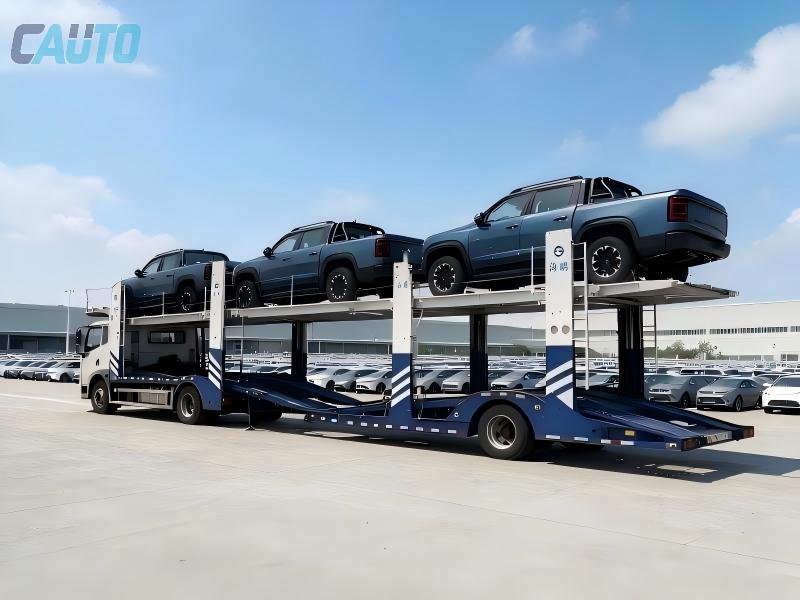
BYD Shark 6 units are shipped from Chinese ports—primarily Guangzhou Nansha, Shanghai, or Ningbo—via Ro-Ro (roll-on/roll-off) vessels for CBU units, or containerised transport for CKD/SKD kits if you are planning local assembly. Transit times to key African and Middle Eastern ports:
- Djibouti (for Ethiopia): 25–30 days
- Durban (South Africa): 25–30 days
- Mombasa (Kenya): 22–28 days
- Lagos (Nigeria): 30–40 days
- Jebel Ali (UAE): 20–25 days
- Dammam (Saudi Arabia): 22–28 days
Given the lithium battery content, all shipments require UN Class 9 hazardous materials certification, UN 38.3 test summaries, and proper dangerous goods labelling. Insurance should cover all risks including battery fire, saltwater damage, and total loss.
Step 4: Customs Clearance and Local Registration
Upon arrival, your customs broker will handle declaration, duty assessment, and inspection. For most African markets, EVs enjoy favourable duty treatment compared to combustion vehicles—Ethiopia, for example, charges just 15% import duty on CBU EVs with full VAT and excise exemption. South Africa applies standard automotive duties but offers no EV-specific incentives at present. Once cleared, the vehicle proceeds to Road Authority registration, compulsory insurance purchase, and final delivery to your showroom or customer.
The Future of PHEV Pickups: What’s Next for BYD Shark?
2026 Export Performance and Market Expansion
The Shark 6’s first-half 2026 export volume of 20,037 units, while respectable, signals that the PHEV pickup segment is no longer BYD’s alone. GWM’s Cannon Alpha PHEV, JAC’s T9 Hunter PHEV with its staggering 385 kW and 1,000 Nm, and Chery’s upcoming Stockman and Rely P3X diesel-PHEV models are all vying for the same buyers. This competition will drive faster innovation, better pricing, and more regional specialisation—but it also means that early movers in underserved markets will capture brand loyalty before the field crowds.
Rumored Domestic China Launch
BYD’s general manager of public relations, Li Yunfei, has stated that the Shark 6 will enter the Chinese domestic market “sooner or later.” A domestic launch would dramatically increase production volumes, potentially lowering export unit costs and improving parts availability. For importers, this is a positive signal: higher volumes mean better factory support, faster spare parts turnaround, and more frequent software updates.
Competition Heating Up: GWM, JAC, Chery Enter the Fray
The PHEV pickup wars are just beginning. GWM’s Cannon Alpha PHEV is already priced aggressively in Australia. JAC’s T9 Hunter PHEV offers more torque than the Shark 6 at a lower price point. Chery is preparing both diesel and PHEV variants of its upcoming Stockman and Rely P3X models. For importers, this competitive landscape creates both opportunity and risk: opportunity to source from multiple suppliers and negotiate better terms; risk of inventory obsolescence if a newer model significantly outperforms your stock. The solution is to partner with an exporter who tracks the competitive landscape and can pivot your sourcing strategy as the market evolves.
Ready to Source the BYD Shark 6 for Your Market?
The BYD Shark 6 is not just a truck—it is a statement that electrified utility vehicles can outperform, undercut, and outlast their diesel predecessors. With 350 kW of power, 3.5-tonne towing, 6.6 kW of mobile power generation, and fuel consumption below 2.0 L/100km, it redefines what a pickup can deliver.
For importers across Africa and the Middle East, 2026 is the window to establish market presence before competition intensifies and pricing power erodes. The buyers are ready. The technology is proven. The only question is who gets there first.
CAUTO Global is your direct channel to BYD’s export inventory. We provide competitive CIF pricing, factory-direct sourcing, homologation verification, UN Class 9-certified shipping, and full after-sales support for BYD Shark 6 importers across Africa, the Middle East, and emerging markets. Contact us today for a customised quote, trim allocation advice, and delivery timeline.
Frequently Asked Questions
Q1 What is the BYD Shark 6 price in 2026?
Pricing varies by market and trim. In Australia, the 2026 range is A$55,900 for the Dynamic Cab-Chassis, A$57,900 for the Premium, and A$62,900 for the Performance (all before on-road costs). In South Africa, the Premium is priced at R 969,900 (~$53,000 USD). In the UAE, the Premium retails for AED 158,900 (~$43,300 USD). CIF pricing for other African and Middle Eastern markets depends on shipping, insurance, and local duty structures.
Q2 How much can the BYD Shark 6 tow?
Towing capacity depends on trim. The Dynamic and Premium trims tow 2,500 kg (braked), which is sufficient for most commercial trailers and small caravans. The Performance trim tows 3,500 kg (braked), matching the maximum ratings of the Toyota Hilux, Ford Ranger, and Isuzu D-Max. All trims feature trailer sway control and a dedicated towing mode in the drive selector.
Q3 What is V2L, and why does it matter for the BYD Shark 6?
V2L (Vehicle-to-Load) allows the Shark 6 to export up to 6.6 kW of electrical power through three 230-volt sockets in the cargo tray. This is enough to run welding equipment, concrete mixers, water pumps, camping refrigerators, or medical devices at remote locations without a separate generator. For construction, mining, agriculture, and humanitarian operations across Africa and the Middle East, V2L transforms the pickup from a transport tool into a mobile power station.
Q4 Is the BYD Shark 6 available in Africa and the Middle East?
Yes. As of 2026, the BYD Shark 6 is officially on sale in South Africa and the UAE, with confirmed distribution networks in Saudi Arabia and Iraq. BYD is actively expanding into additional African markets including Kenya, Nigeria, and Egypt. For markets without official BYD representation, authorised importers can source the vehicle directly from Chinese export channels. CAUTO Global facilitates factory-direct sourcing for importers in markets without established BYD dealer networks.
Q5 What is the electric range of the BYD Shark 6?
All BYD Shark 6 trims share a 29.58 kWh LFP Blade Battery delivering approximately 80–100 kilometres of pure electric range under NEDC testing conditions. Real-world EV range varies with driving style, terrain, and climate, but most urban commuters can complete daily driving without using any petrol. Once the battery depletes, the hybrid system seamlessly engages the petrol engine, providing unlimited range for long-distance driving.
Q6 PHEV vs diesel pickup: which is better for African and Middle Eastern markets?
For most use cases in 2026, the PHEV is the superior choice. The BYD Shark 6 offers more power (350 kW vs ~150 kW for diesel rivals), lower fuel costs (1.3–2.0 L/100km vs 8–10 L/100km), zero tailpipe emissions in EV mode, and V2L capability that no diesel pickup can match. The only scenarios where diesel still holds an edge are extreme remote operations with no fuel supply chain at all—and even there, the Shark 6’s hybrid mode provides the same range security. As charging infrastructure expands across African cities and Middle Eastern urban centres, the PHEV advantage will only grow.
Q7 How do I import the BYD Shark 6 from China?
Importing the BYD Shark 6 involves four key steps: (1) Verify homologation—confirm the trim meets your country’s type-approval standards; (2) Select your trim and place an order—Dynamic for commercial fleets, Premium for volume sales, Performance for towing markets; (3) Arrange shipping—typically Ro-Ro from Guangzhou/Shanghai/Ningbo to your destination port (20–40 days), with UN Class 9 hazmat certification for the battery; and (4) Clear customs and register—pay applicable duties, pass inspection, and complete Road Authority registration. CAUTO Global manages the entire process from factory gate to your showroom, including compliance verification, shipping, insurance, and documentation.
About CAUTO Global
CAUTO Global (China Automotive Global Supply Chain Co., Limited) is a verified reliable exporter specialising in connecting African and Middle Eastern markets with China’s leading NEV and PHEV manufacturers. With direct factory relationships across 30+ brands including BYD, expertise in CBU, SKD, CKD, and full production line exports, and end-to-end logistics coordination from Chinese ports to destination showrooms, CAUTO Global provides importers, dealers, and fleet operators with compliant, cost-effective vehicle sourcing solutions.